The Seasonal Market Calendar
A family market runs on the year’s own clock. Here is the season-by-season structure behind Famica Market’s listings and events — what appears when, why it disappears, and how to plan a year of buying around it.
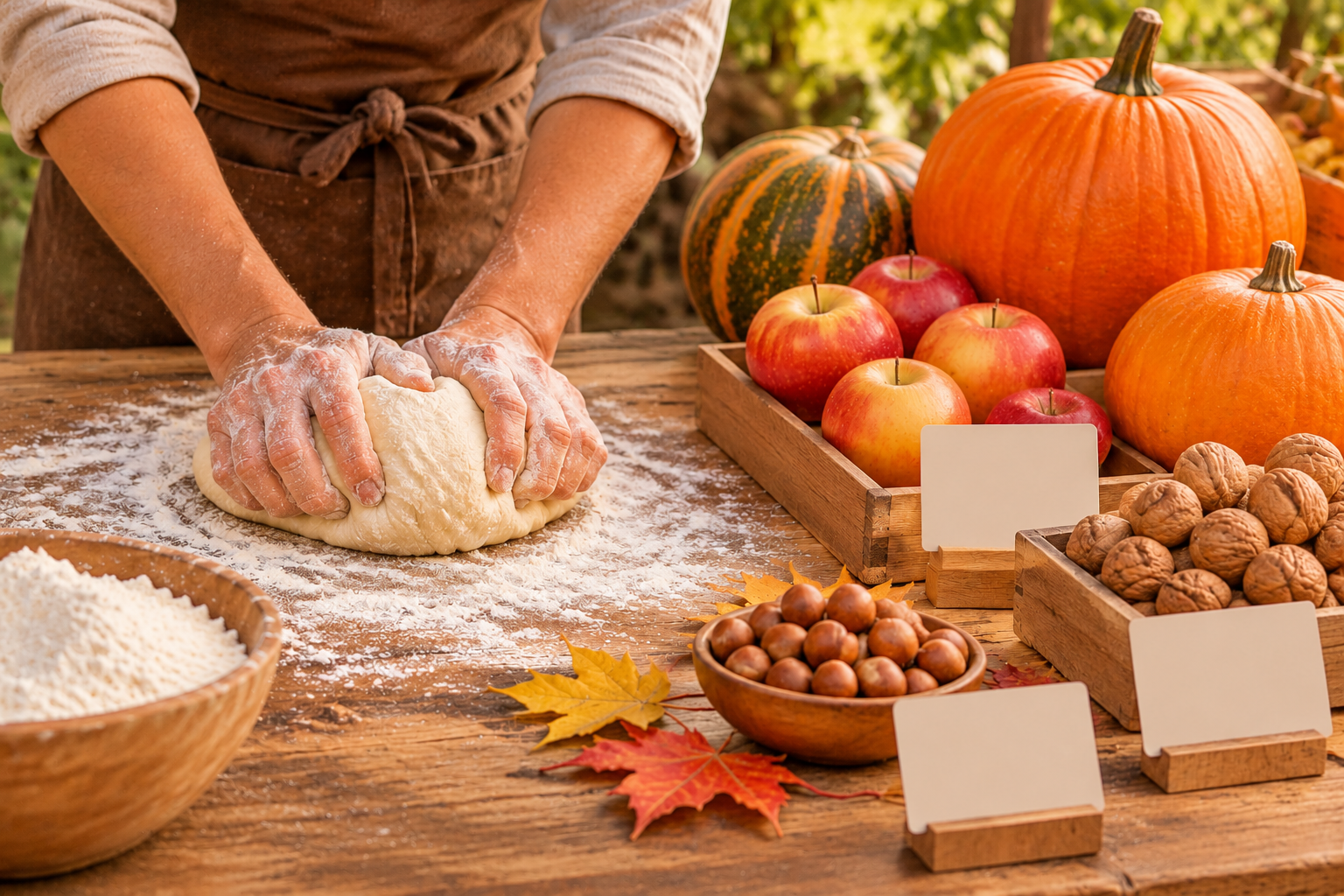
Why a calendar, not a constant catalogue
Supermarkets sell the same twelve months forever. A family market cannot, and should not: the point of small-batch food and craft is that it comes from somewhere, and ‘somewhere’ has seasons. Rachel’s strawberry jam exists when English strawberries are worth bottling. The spring wild-garlic cheese exists for a few weeks when the garlic is. Pretending otherwise would require either import substitutions or preservation tricks — both of which break the maker-first rule the market runs on.
So Famica Market is organised as a rolling calendar rather than a fixed catalogue. Listings open and close with the harvests and the kiln firings; market-weekend events cluster around the points of the year when producers genuinely have something new to show; and the journal carries the dates in advance so buyers can plan rather than chase. Nothing is ever ‘always available’. Everything has a window, and the window is stated.
For buyers this changes the question from ‘is it in stock?’ to ‘when is it at its best?’ — which is the better question anyway, and the one the sellers themselves cook and make by.
Spring: the reset quarter
March to May is when the market resets. The preserve cupboard empties of last year’s damson and quince; the first rhubarb and ginger batches arrive, sharp and bright. Dale End’s spring cheese — made only while wild garlic is in leaf — appears for a few weeks and disappears without apology. Fernwood’s first kiln opening after the winter break usually lands in March, and it is traditionally the largest of the year because Nia makes through January and February when markets are quiet.
Spring is also when the seller calendar renews. Existing sellers confirm their production plans for the year; a small number of new sellers are onboarded after the winter open-call (announced on the become-a-seller page). The market deliberately grows slowly — eight to twelve new sellers a year — because every addition must satisfy the maker-first rule, and that takes verification: a conversation, a look at the workshop or kitchen, and a paper trail.
Buyer advice for spring: join early. The best seasonal windows — wild-garlic cheese, first rhubarb jam, the March kiln opening — are the smallest batches of the year. The seasonal events announcement goes out in the journal in late February.
Summer: peak abundance, peak logistics
June to August is when the market is at full stretch. Fruit stalls run week to week — strawberries, then raspberries, then currants — and preserve batches follow the fruit in real time, which is why Hedgerow’s listing updates rather than rests. The summer night market, the calendar’s flagship event, lands in late June: extended trading hours, producer demonstrations, and the only night of the year the whole seller network is live at once.
Summer is also when the logistics of posting food get serious. The chilled courier rules tighten — cheese ships Monday to Wednesday only, Woolcool packaging is non-negotiable, and sellers hold dispatch on the few genuinely hot weeks rather than risk a softened truckle. Buyers sometimes read this as slowness. It is the opposite: it is what it takes for a twelve-month cloth-bound cheddar to arrive tasting like the cold store it left.
Craft sellers feel summer differently. Beeswax & Bloom’s summer scents — fig leaf and tomato stem — sell through fastest, and the candle studio’s returnable-tin scheme peaks as people clear out last year’s empties. Looped & Bound goes quiet by design; nobody needs a lambswool beanie in July, and the sisters use the season to knit autumn stock and drive to the mill for the autumn colour pick.
Autumn: the preserving quarter
September to November is the market’s heaviest season, and the one its regulars plan around. Damsons, quince, plums and windfall apples move through the preserve kitchen in a steady procession; chutneys — which need six weeks in the jar before they are ready — are made now for Christmas eating. Dale End’s winter wash-rind returns when the cows come in. The antiques-and-craft weekend, the calendar’s second flagship, runs in mid-October and is the one event where makers bring their whole back catalogue, including seconds at honest prices.
Autumn is also when the made-to-order windows open across the craft stalls. Looped & Bound’s colourways for winter are announced in September; Timber & Twine takes Christmas engraving bookings from the first week of October, because hand-lettering adds three days to every board and December has a hard edge. The journal runs a ‘plan your Christmas from October’ piece every year, and every year people read it in December.
Buyer advice for autumn: order the things that take time, early. Engraved boards, made-to-order knitwear, whole cheese truckles and the preserve year’s last big batches all have real lead times, and the calendar exists precisely so those times are visible before they become deadlines.
Winter: light, warmth and the long closes
December belongs to the Christmas market weekends and then to rest. The market does not pretend to run a full programme between the third week of December and mid-January: bakers close, the dairy’s cold store catches up with itself, and the journal goes weekly instead of daily. Buyers who ordered in November receive everything before the closes; buyers who did not find honest ‘back in January’ notices on most listings.
What winter does offer, it offers well. The smoked-pine and clove candles exist for exactly this stretch of the year; the 18-month cheddar reaches its best for the cheeseboard; the wood-fired sourdough’s bake days become anchor points in a quiet month. Kiln openings resume in late January, and the first spring announcements land in the journal before the month is out.
The year then closes its loop: the calendar is republished with next season’s windows, the seller open-call reopens, and somewhere in a kitchen in Worcestershire, the first rhubarb of the year is already in the pan.
Using the calendar: three practical habits
First, subscribe to the journal rather than browsing listings cold — the seasonal announcements land there first, and the market-weekend dates are published a quarter ahead. Second, read the window lines on each listing: ‘bake days Tue/Thu/Sat’, ‘dispatch Mon–Wed chilled’, ‘kiln opening every 3–4 weeks’ are not boilerplate but the actual rhythm of the maker behind them. Third, plan gifting around October: it is the month when every made-to-order window is open and the Christmas deadlines are still comfortable.
None of this is complicated, and all of it is the difference between a market and a warehouse. The calendar is the market’s oldest feature and its most honest one: the year has a shape, the makers work inside it, and now the listings do too.
The exceptions: what deliberately ignores the calendar
A calendar piece would be dishonest without naming the things that run against it, because Famica is not a purist project and some of the best listings break the seasonal pattern on purpose. The house sourdough bakes fifty weeks a year — only the Christmas and New Year closes stop it — because an eighteen-hour prove is a weekly discipline, not a harvest. The candle studio pours year-round: beeswax is a summer harvest, but winter is when candles are wanted, so the wax waits in the Weald rather than the customer waiting for wax.
Chocolate sits between the two. Cocoa harvests are seasonal at origin, but the bars rest for weeks after grinding and keep beautifully for months, so the Famica listing follows the harvests of three hemispheres at once — when Ecuador’s main crop ends, Madagascar’s is just starting. What the calendar does govern is honesty about origin: the bar’s collar card names the estate and the roast date, and when a specific harvest sells through, the next one is a different harvest, not the same bar wearing its clothes.
Craft listings follow the kiln and the mill rather than the field, which makes them calendar-light but calendar-real: Fernwood’s openings land when the kiln is full and cool, roughly every three to four weeks with a summer pause while the studio teaches, and Looped & Bound’s colour picks happen at the mill twice a season regardless of what the retail calendar wants. Timber & Twine is the flattest of all — storms do not consult anyone — but the two-year drying stack acts as its own calendar: what was felled in the winter of 2024 is only now being marked out, and the listing says so.
The rule of thumb for buyers is simple: the calendar tells you when things appear; the exceptions tell you why some things never disappear. Both are stated on the listings, because a market that explains its rhythm earns the patience that rhythm sometimes asks for.
More from the Journal
 People
Meet the Makers
Eight stalls, four counties, one rule: the person who makes it is the person who sells it. We spent a season visiting every seller on Famica…
 Food safety
Allergen Guidance for Market Buyers
How allergen information works on Famica Market: what the law requires, what our sellers must state on every listing, how to read it, and wh…